Zero-Shot Language-to-Motion Planning with Geometric Validation
Reproduction and extension of LMTG
A language-to-motion prototype that converts instructions into waypoint trajectories and checks them for collisions before execution.
Problem
LMTG generates manipulation trajectories from natural-language instructions without task-specific training, but a language model has no geometric model of the workspace, so generated waypoints can pass through objects or approach with an unusable end-effector orientation. This project asked whether a reproduction of LMTG could be made safe enough for real-robot trials by validating its output geometrically before execution.
Key result
Zero-shot — Planning setting. No task-specific model fine-tuning in the prototype.
Contribution
I implemented the task representation, waypoint parser, and collision checks, then connected the planner to simulation and initial real-robot trials.
My Role
- Designed structured task and scene representations for language-model planning.
- Implemented waypoint parsing, validation, and collision-aware trajectory generation.
- Evaluated the planning loop in simulation and explored initial perception and real-robot execution integration.
Team Contribution
- Laboratory mentors guided the research scope and reviewed prototype behavior.
- Shared simulation assets and robot models supported evaluation.
Method
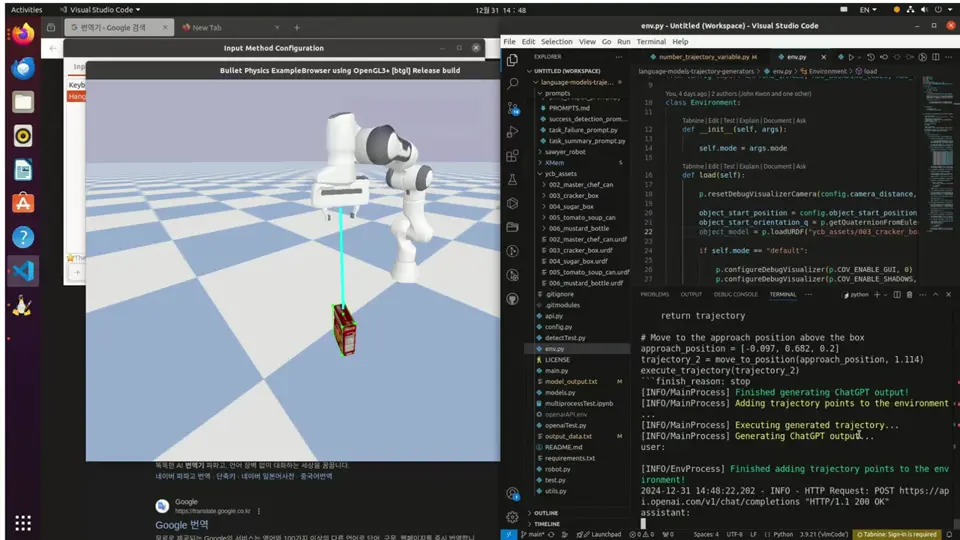
I reproduced LMTG on Franka and PyBullet, then extended it with object-aware waypoint and end-effector orientation refinement and height-based collision avoidance. Instructions are parsed into a structured task and scene representation, the language model proposes waypoints, and every trajectory is checked against scene geometry before execution. Initial sim-to-real perception integration connected the planner to early real-robot trials.
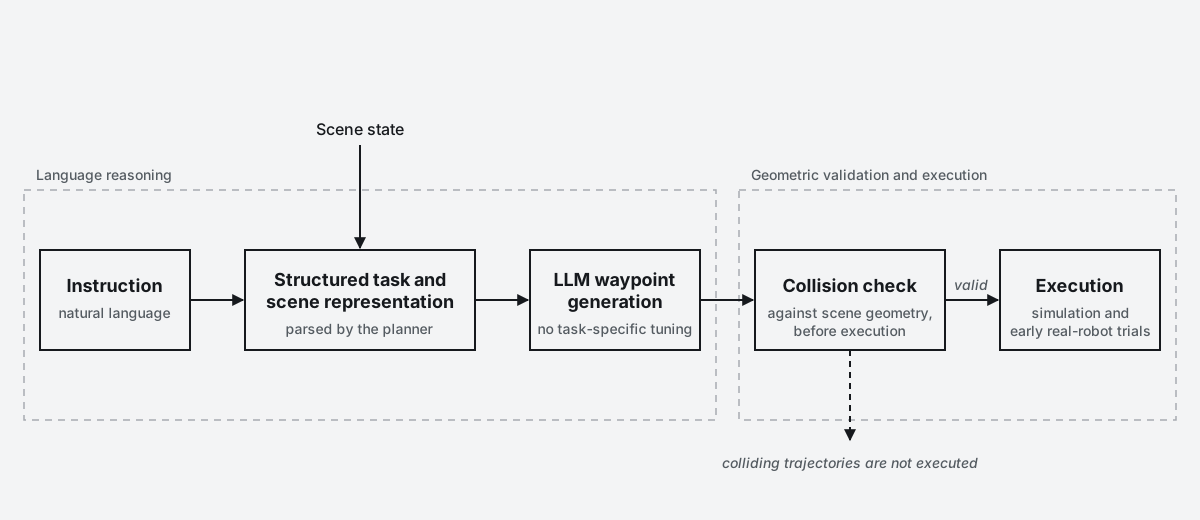
- Natural-language task parsing
- Structured waypoint generation
- Collision-aware trajectory validation
- Simulation and early real-robot integration
Evaluation results
| Condition | Result | Note |
|---|---|---|
| Planning setting | Zero-shot | No task-specific model fine-tuning in the prototype. |
| Planning pipeline | 3 stages | Instruction parsing, waypoint generation, and collision checking. |
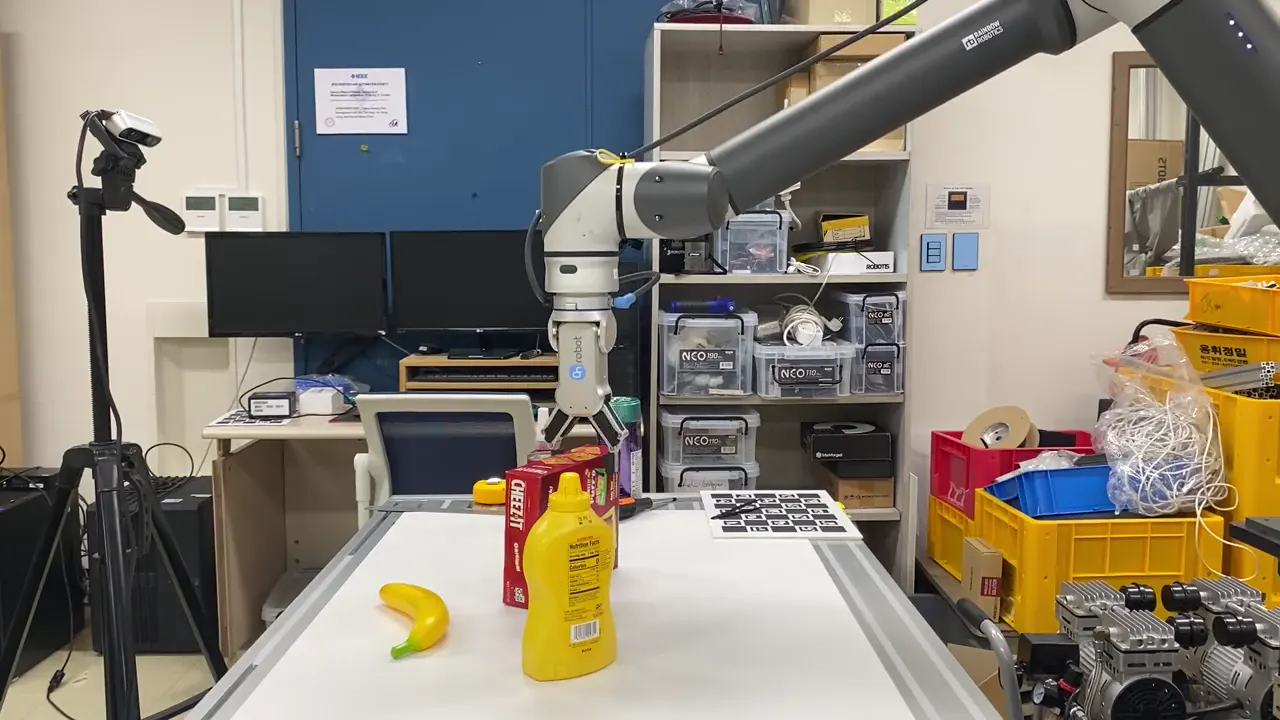
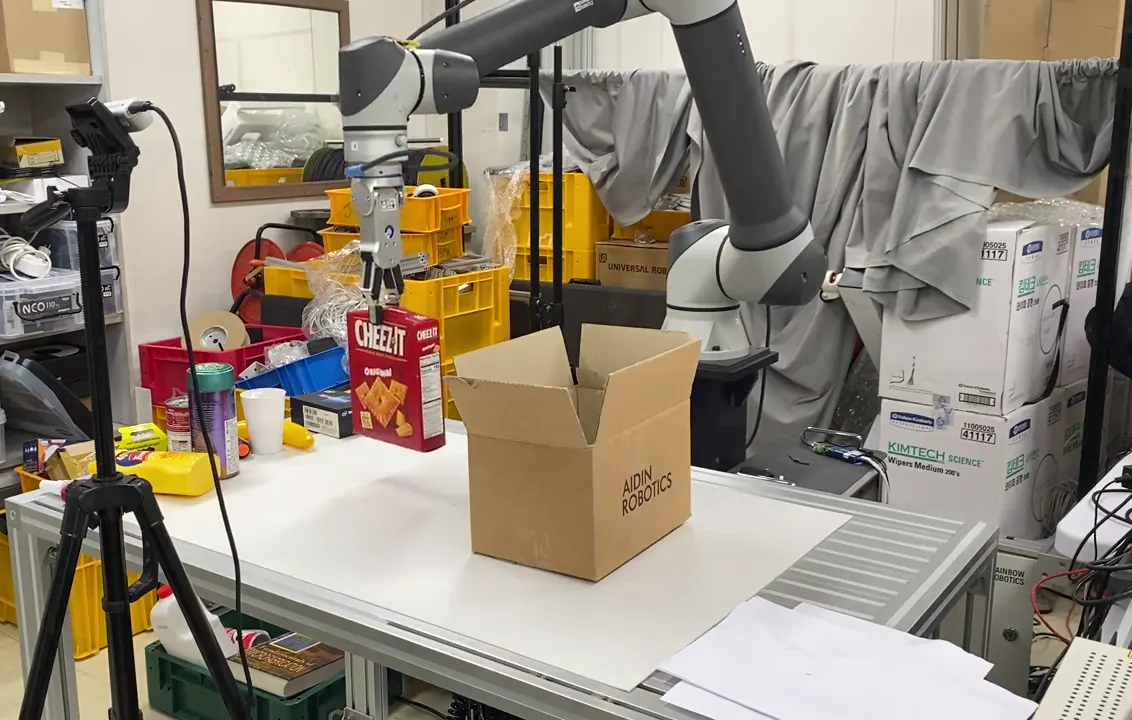
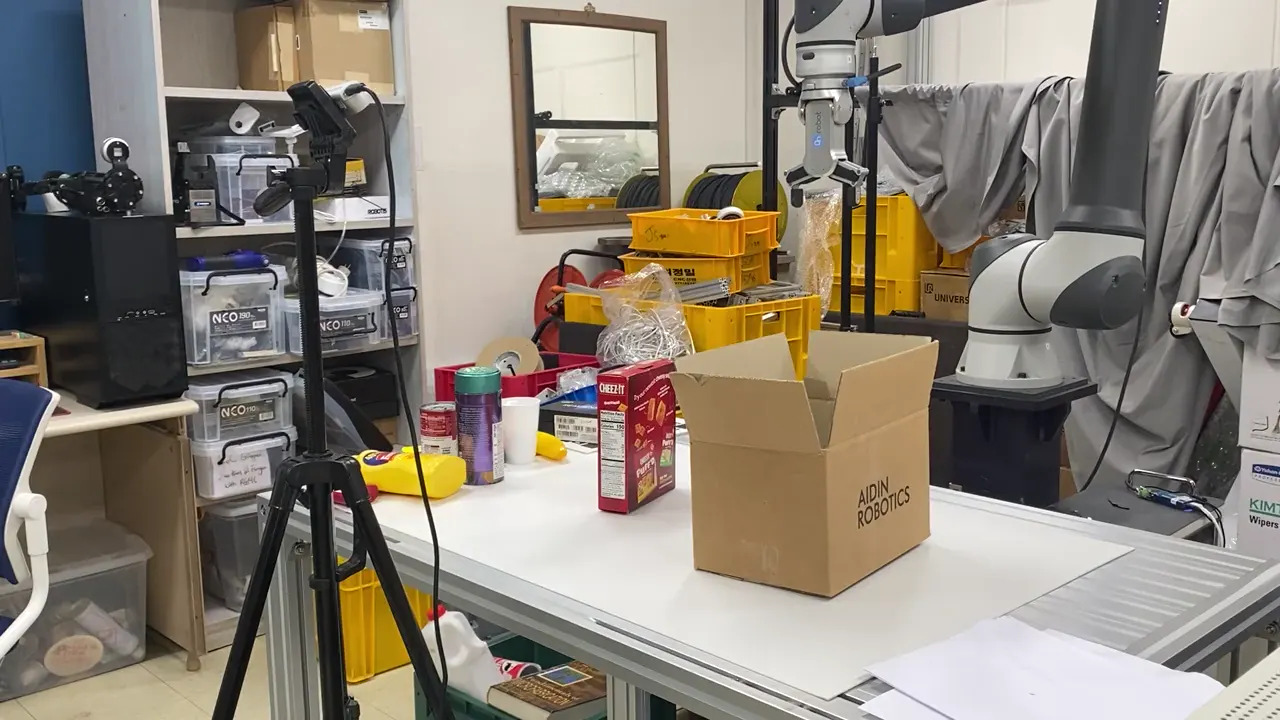
The planning loop was evaluated in simulation, and the real-robot clips on this page are prototype demonstrations rather than a controlled benchmark, so no quantitative success rate is claimed. The contribution is the validated language-to-motion pipeline and the perception integration that the VLM-grounded LMTG project extended.
Experiment evidence
Limitations
- Real-robot clips are prototype demonstrations rather than a controlled quantitative benchmark.
- The project has not been evaluated in a controlled real-robot benchmark.
Observed failure
Materials
Stack. Python, LLMs, PyBullet, Motion Planning, Prompt Engineering.
Code and materials. Trajectory-generation research fork