Grounded Language-to-Motion Planning with Memory and Gripper Constraints
Extension of LMTG
A tabletop manipulation planner that combines visual grounding, execution memory, and gripper-aware grasp selection for real-robot execution.
Problem
Language-model planners for tabletop manipulation often fail for reasons unrelated to reasoning: the object named in the instruction is not grounded in the image, the chosen grasp does not fit the gripper, or the same mistake is repeated after a failed attempt. The question was how much of a fixed scenario set a planner could complete once grounding, gripper constraints, and execution memory were made explicit.
Key result
12/15 — Improved system. Successes in the defined 15-scenario evaluation.
Contribution
I connected visual grounding and execution memory to the planner, then evaluated the system on a fixed set of 15 scenarios. Success increased from 9/15 to 12/15.
My Role
- Built the scene-grounding interface between visual observations and language-conditioned planning.
- Added memory and gripper-aware grasp selection to reduce repeated execution failures.
- Designed and ran a 15-scenario evaluation comparing the initial and improved systems.
Team Contribution
- Research framing and experiment review were developed with laboratory mentors.
- The work reused shared simulation and manipulation infrastructure.
Method
I integrated GPT-based visual grounding with Lang-SAM so that instructions resolve to segmented objects in the scene, added task memory and grasp-mode selection, and wired failure replanning for both PyBullet and RB10 execution. Task-order verification and explicit prompt constraints were enforced so the planner could not skip or reorder required steps.
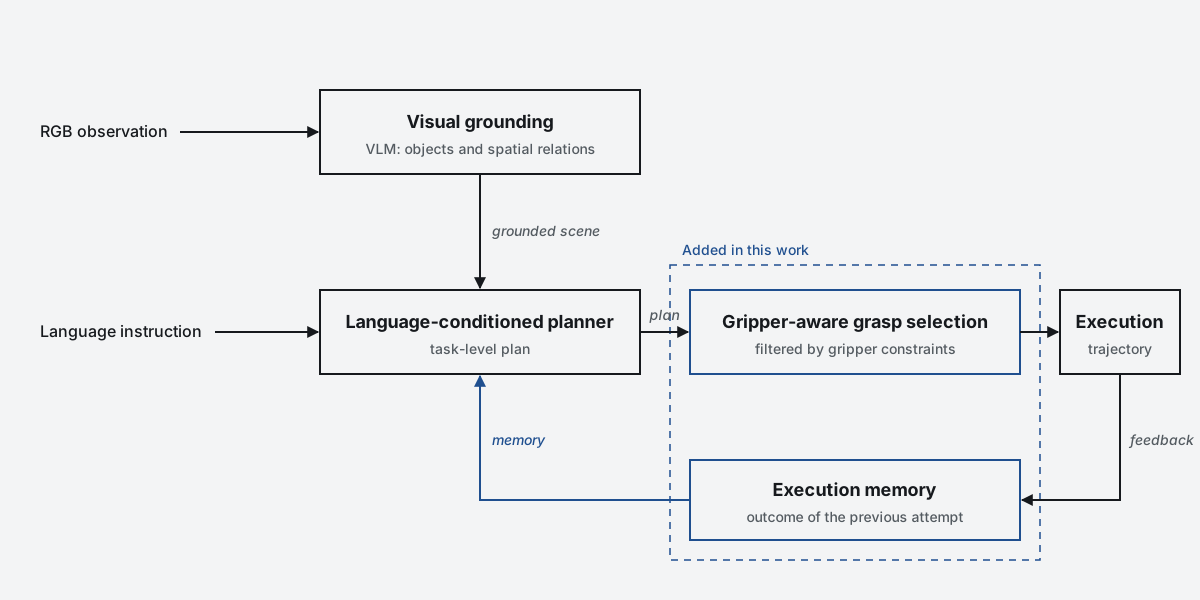
- Visual scene grounding
- Grasp candidate selection
- Execution-memory update
- Language-conditioned trajectory generation
Evaluation results
| Condition | Result | Note |
|---|---|---|
| Improved system | 12/15 | Successes in the defined 15-scenario evaluation. |
| Initial system | 9/15 | Baseline before memory and gripper-aware improvements. |
| Additional successes | +3 | Improvement within this evaluation protocol. |
On the fixed 15-scenario evaluation set, success rose from 9/15 with the initial system to 12/15 with grounding, memory, and gripper-aware selection in place. The gain is specific to those scenarios; cluttered or previously unseen real-world scenes were not part of the evaluation.
Experiment evidence
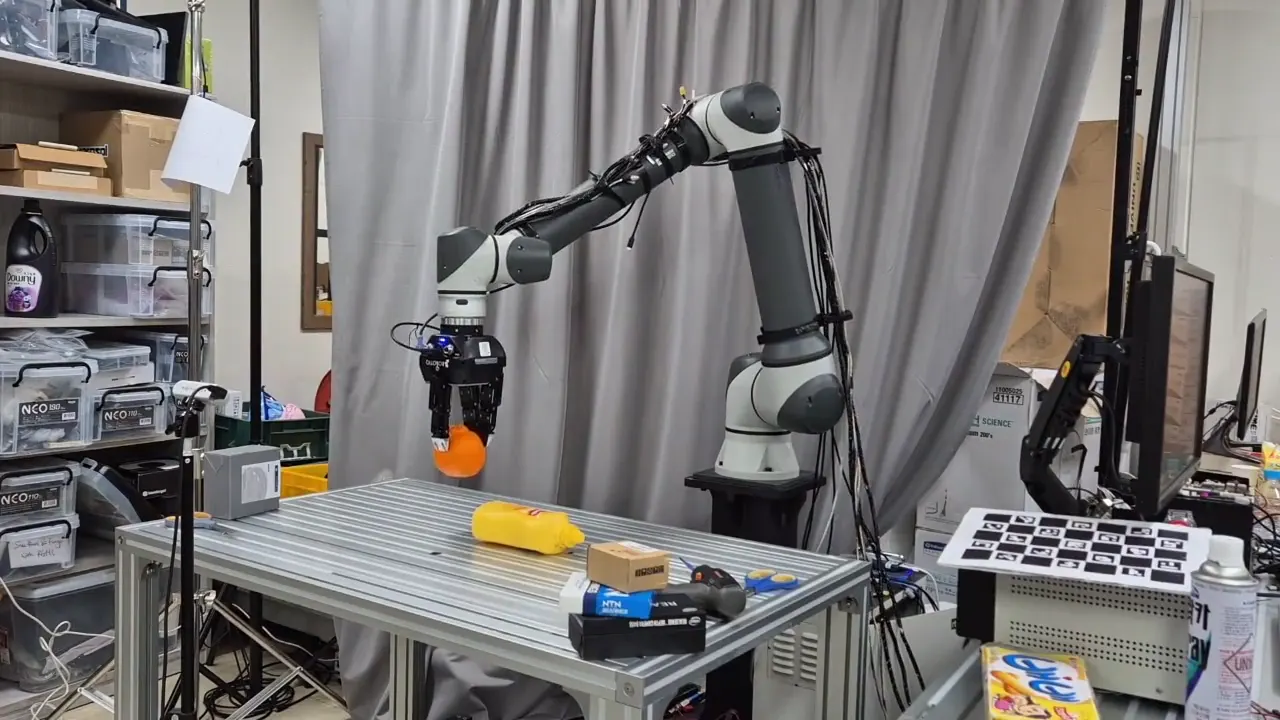
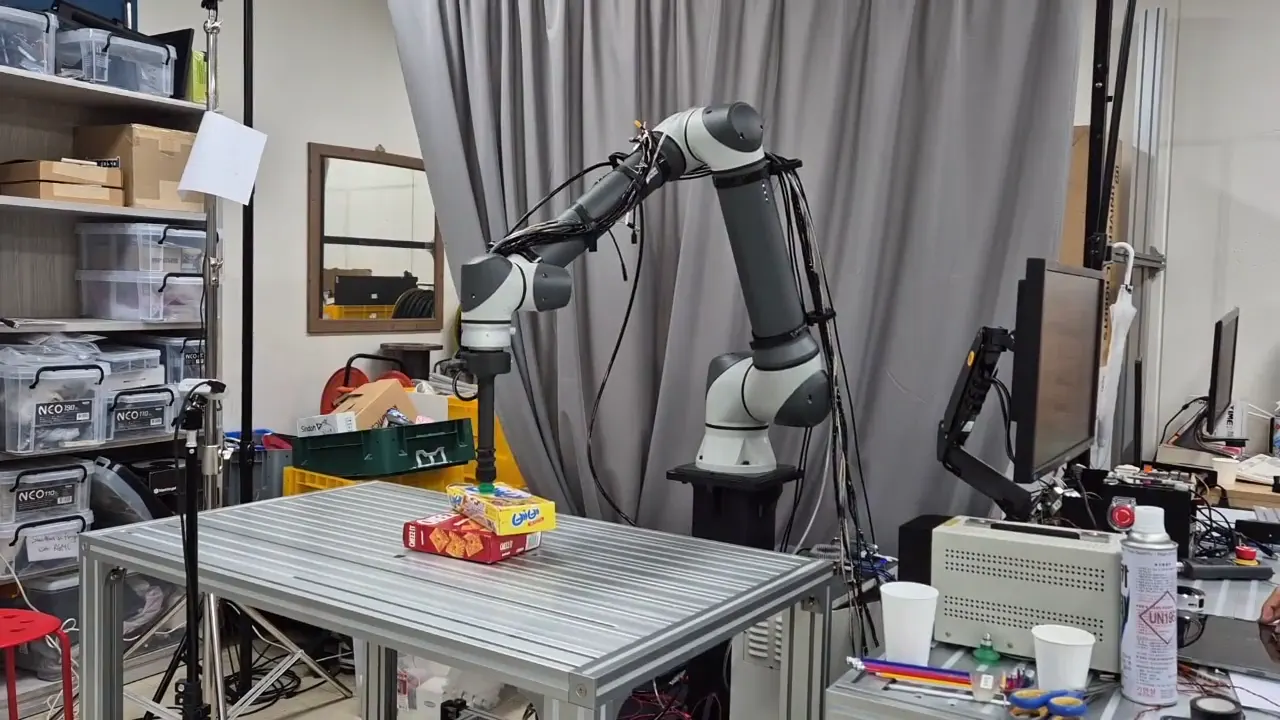
Limitations
- The reported improvement is limited to the defined 15 scenarios.
- The 15-scenario evaluation did not include cluttered or previously unseen real-world scenes.
Observed failure
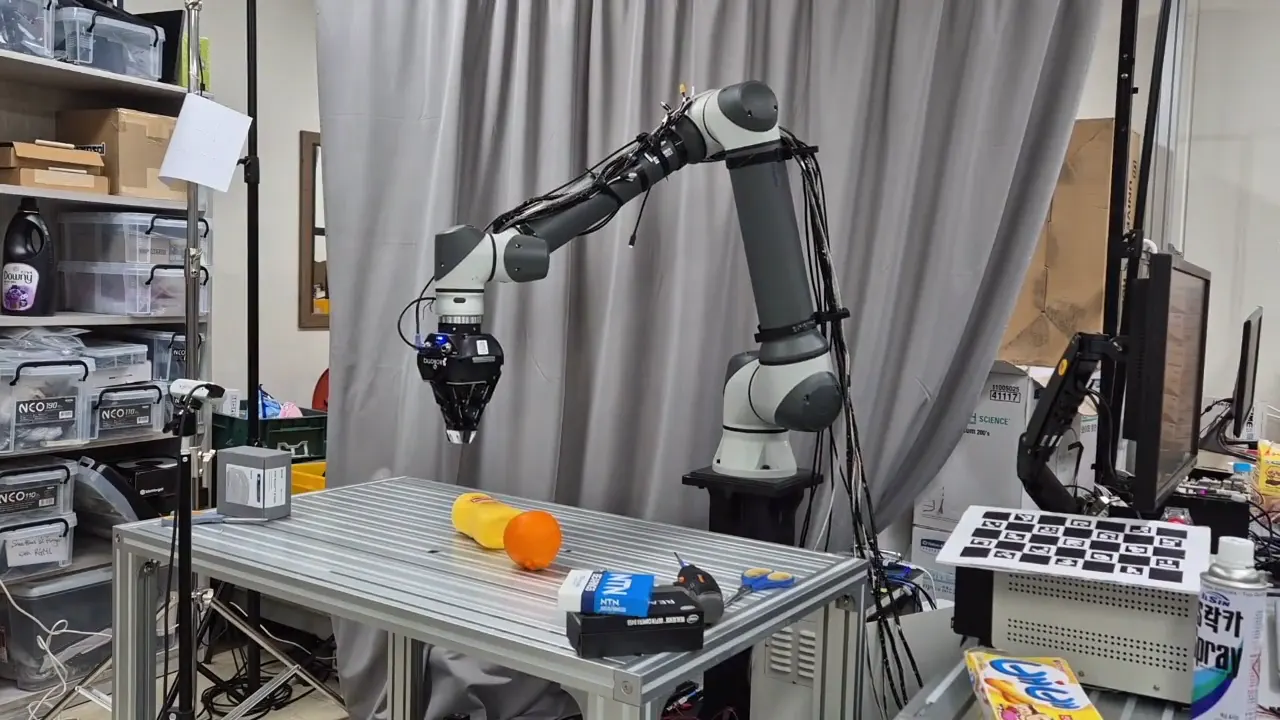
Materials
Stack. Python, Vision-Language Models, LLMs, PyBullet, Manipulation Planning.
Code and materials. VLM, memory, and gripper research fork