Force-Feedback Teleoperation for Real-Robot Imitation Learning
RAGTAL / DNA-HERO Team Project
An RB10 imitation-learning system trained from force-feedback teleoperation demonstrations and evaluated through repeated real-robot rollouts.
Problem
The DNA-HERO team built a custom teleoperation system with external force/torque sensing and force feedback for collecting manipulation demonstrations on an RB10. The learning question was whether demonstrations gathered through that system could train a policy that completes the team's three manipulation tasks on the real robot, and which policy class should be deployed.
Key result
9/10 — Integrated final trials. Successful demonstrations during the final presentation setting.
Contribution
As Learning Lead, I built the demonstration-to-rollout workflow, curated the training data, and conducted 50 real-robot rollouts for each evaluated model.
My Role
- Led learning-system integration from teleoperation demonstrations to policy rollout.
- Collected and curated real-robot demonstrations and ran 50 rollouts per evaluated model.
- Diagnosed failure cases and coordinated model iteration with the hardware team.
Team Contribution
- Team members designed and assembled the force-feedback teleoperation hardware and supporting electronics.
- Hardware, control, learning, and presentation work were integrated across the full DNA-HERO team.
Method
As Learning Lead I owned the pipeline from demonstration preprocessing to rollout: curating the teleoperation data, training BC-Transformer and image-based diffusion policies, deploying checkpoints on the robot stack, and running RB10 rollouts. The deployed stack integrated dual RGB-D observations, OnRobot gripper I/O, and RB10 control on top of the team's teleoperation hardware.
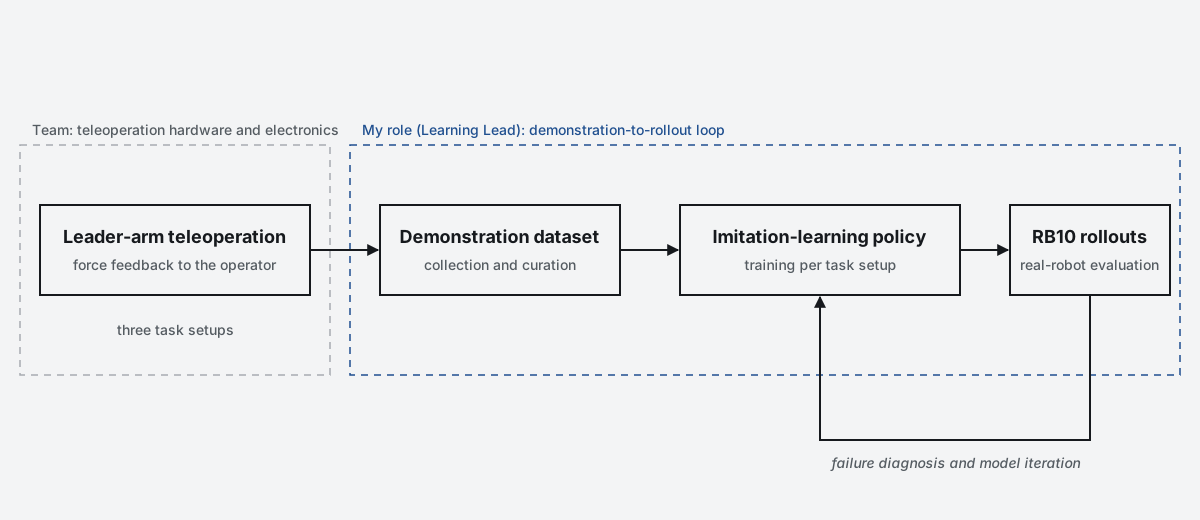
- Force-feedback teleoperation
- Demonstration collection
- Imitation-learning policy training
- RB10 rollout evaluation
Evaluation results
| Condition | Result | Note |
|---|---|---|
| Integrated final trials | 9/10 | Successful demonstrations during the final presentation setting. |
| Rollouts per model | 50 | Real-robot evaluation runs used for model comparison. |
| DNA Capstone Design | Grand Prize | Awarded for the integrated team project. |
BC-Transformer and diffusion policy were compared in 50 real-robot rollouts per model. The integrated system completed 9 of 10 trials across three manipulation tasks in the final-presentation setting; this result describes that presentation condition rather than a broad benchmark. The project received the Grand Prize at the Sungkyunkwan University stage of the DNA-HERO industry-academia program.
Experiment evidence
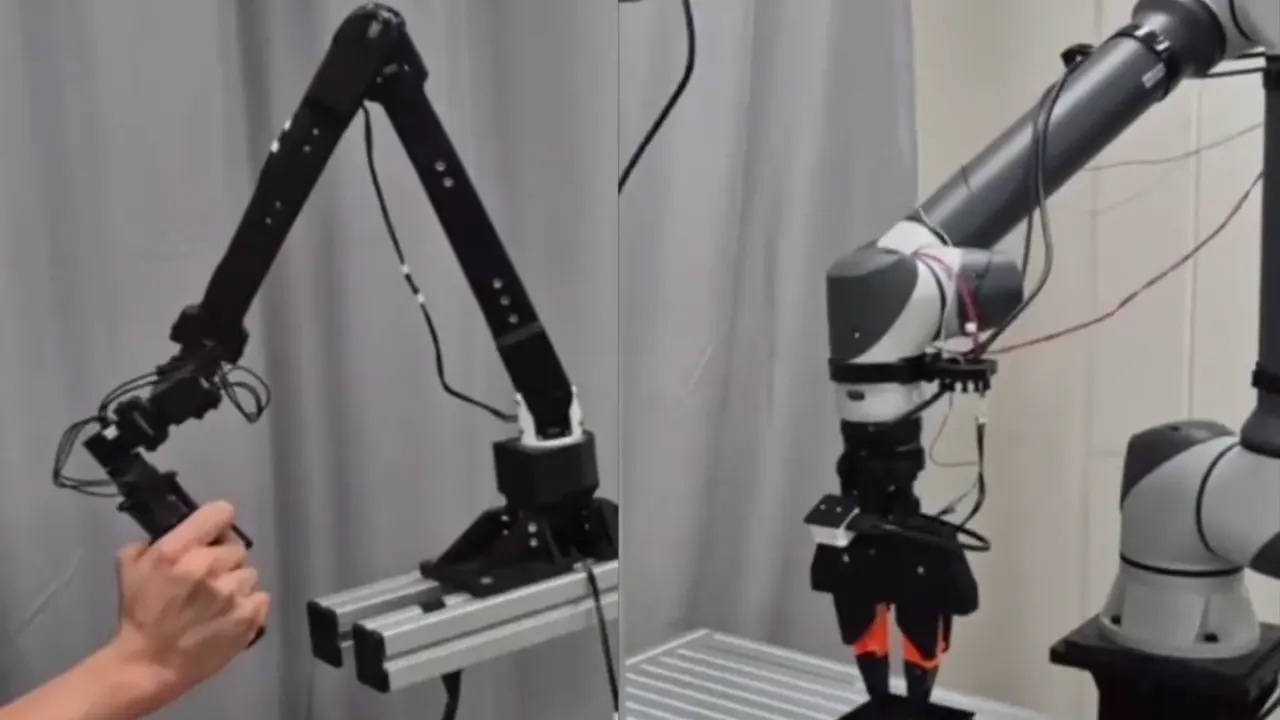
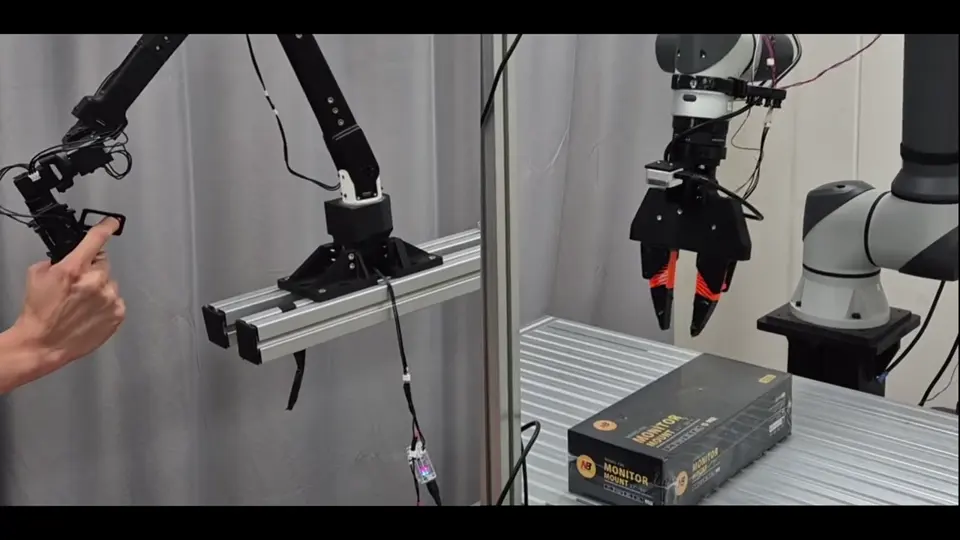
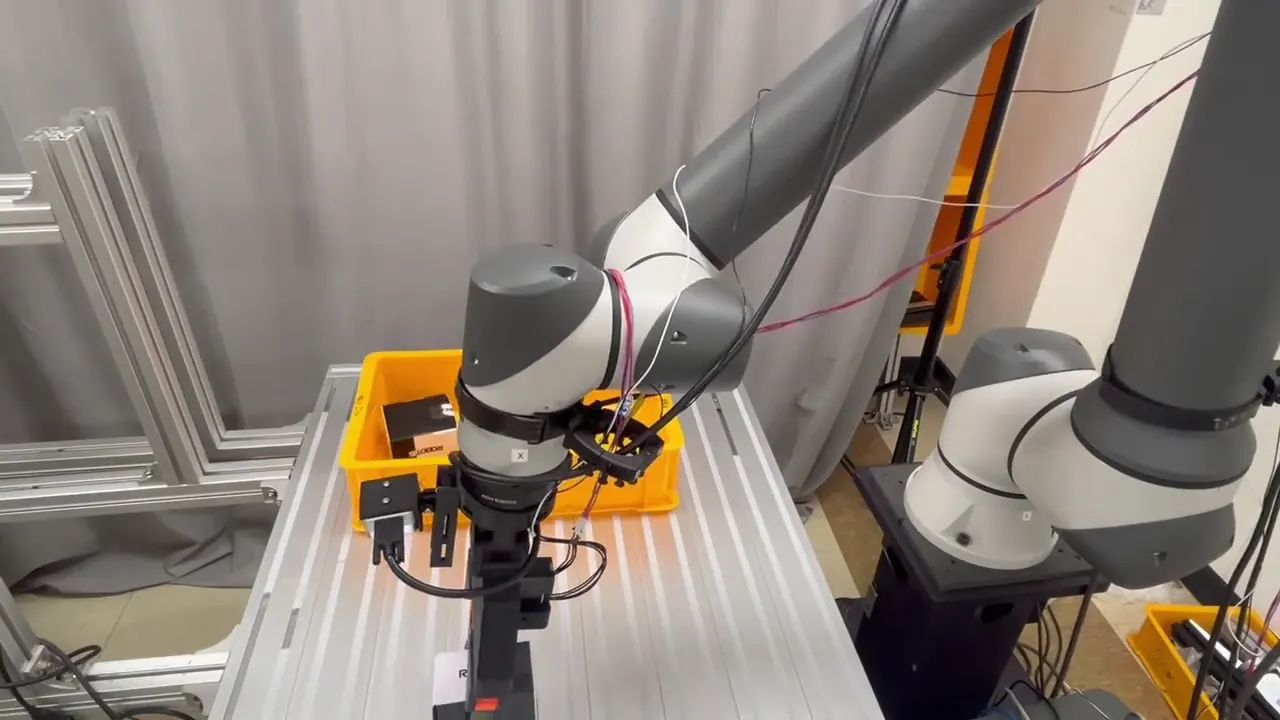
Limitations
- The 9/10 result reflects the final-presentation condition, not a broad benchmark.
- The hardware team designed and fabricated the teleoperation system.
Materials
Stack. Python, PyTorch, ROS 2, RB10, Teleoperation, Imitation Learning.
Code and materials. Request team repository access